Coming 2027
Group Shot: Poems of the Vietnam War & Its Aftermath
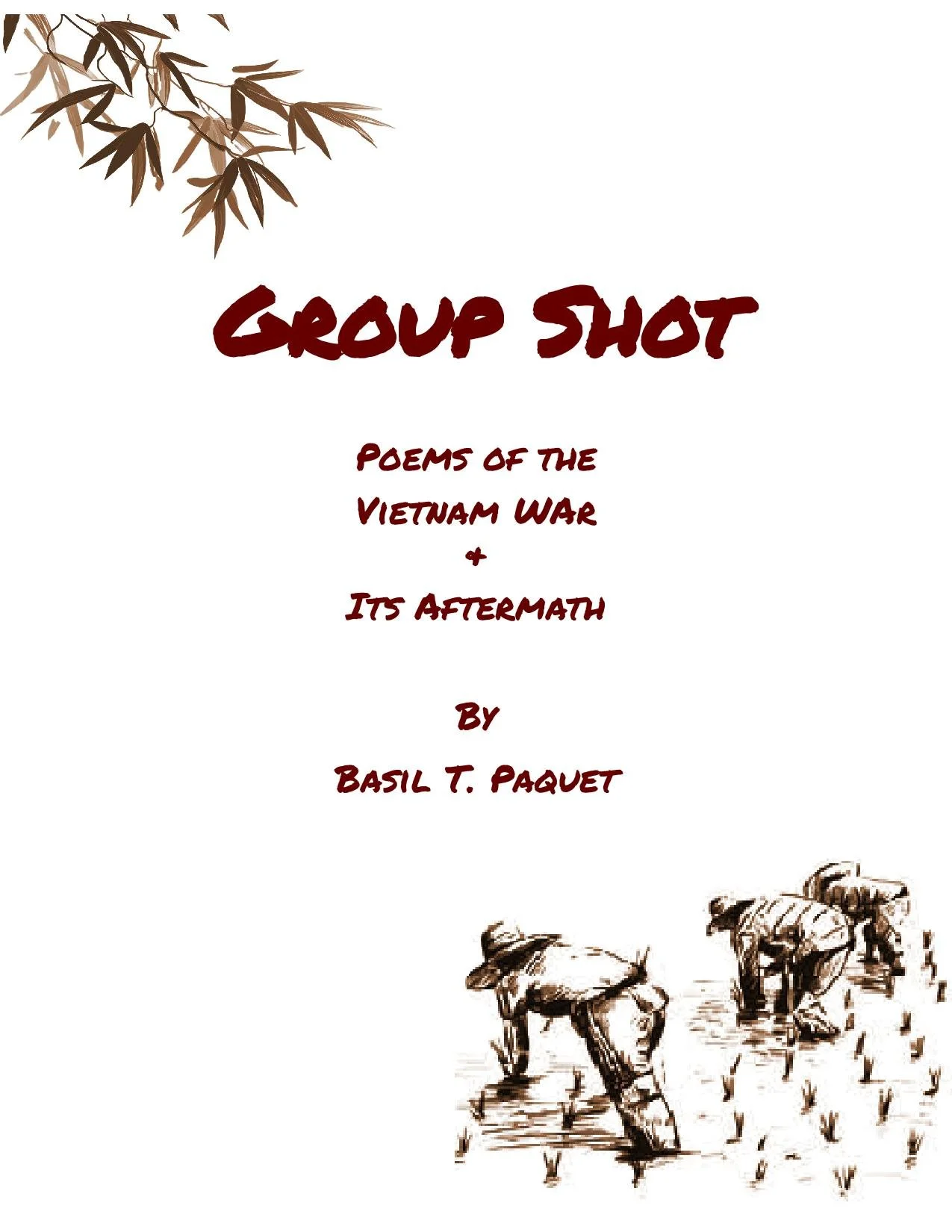
Group Shot bears witness to the Vietnam War and its aftermath through poetry that uses narrative, dramatic and lyrical voices in portraits, vignettes and dioramic snapshots. The collection’s books and chapters capture the fractal, shared reality of the war’s ordinary agents and victims. Book 1 transports us on a journey “In Country” and choppers us into the war at ground-level to detail its action, terror, trauma, chaos, physical and psychological wounds. Book 2 takes us “Back in the World” to the grim aftermath and struggle of the war’s survivors. Group Shot honors the memory and neglected legacy of the war’s innumerable civilian and military casualties, unearths our buried conscience, and urges us to remember what so many have chosen to forget.
Reviews
“These are poems of witness written by a man driven to witness, to remind the country what it never wanted to know when it was happening and what it forgot or comfortably mythologized when it was supposedly over….there is a tension between the elegiac, graceful language of many of the poems and the ugliness of what they describe that is powerfully transformative….the aching beauty Paquet creates in these poems is born from the need to not only tell truth, but to share it experientially through art, to allow us to feel it in our hands and guts and hearts, to know in our senses how the war looked, smelled and tasted and felt, and to know in our conscience what wisdom we might choose to take from that knowing.”
Wayne Karlin, novelist, poet, essayist, editor, author of Drinking with the Enemy, and winner of the Vietnam Veterans of America Excellence in the Arts Award.
Quotes from other authors about GROUP SHOT
“Back in 1972, when the first-ever-of-its-kind Winning Hearts and Minds: War Poems by Vietnam Veterans was published, Basil Paquet was clearly far and away the most accomplished poet in the book. But soon after it appeared, Paquet disappeared from the literary landscape, as far as I know never publishing another poem thereafter. Until now, that is. Fifty-four years later, Paquet has finally put together his own collection of poems. Many of those older poems are included, but most of the poems in Group Shot are published here for the first time. I am really happy Paquet has reappeared, and I’m really happy to have these poems.”
W. D. Ehrhart, poet, essayist, editor, and author of Thank You for Your Service: Collected Poems
“Writing meaningful poetry requires a devotion to language, a deep empathetic dive into the lives of others, and a skill at using words to activate all the senses. But it also requires a knowledge of one's readers and what they might bring to a particular poem from their life experiences. Basil Paquet excels in all these categories.
As a veteran of the war in Vietnam myself, Paquet's constant use of 'nam terms and acronyms resonates with me and makes his poems that much more meaningful. If you're not a member of that audience, the poet has provided a comprehensive glossary at the end of his book to help you navigate through some of his poems. But, to his credit, his language does not exclude others from experiencing the true depths of war. His imagery and clarity follow a beautiful rhythm that makes his work accessible even to my high school and college-age granddaughters, to whom I will be sure to give copies.
Please buy a few copies of this profound collection -- one for yourself; one for your public library; and one for your children's school library. Now, more than ever, Americans need to know at the deepest levels what waging war in their names entails. Statistics and abstract theories, not to mention the euphemisms that the government employs to sell its wars, will not do. People need to feel war at its greatest depths. Basil Paquet’s poems will take you there.”
Doug Rawlings, Co-founder of Veterans for Peace, author of In the Shadow of the Annamese Mountains and other works.
“If you read just one book of poetry in 2027, make it this one. Group Shot is stunning and extraordinary. I wept to read it; the combination of the agonizing subject matter, and the beauty of the language is devastatingly powerful. In this cohesive collection of narrow-lens, concretely detailed, lyrical poems, Basil Paquet illuminates the experience of the Vietnam war the way “tracers rip through ... black plumes.” Paquet revisits the conflict which tested the conscience of America, shadowing the reader through intimate death, quirks of fate, and an exquisite natural landscape. In language frankly personal and richly beautiful, these poems gaze into the confluence of rivers where “the waters of memory and oblivion braid.” With “distance...between us and the hell we summon” Group Shot timely invokes the profound implications of unleashing dogs of war—then and now.”
Cindy Ellen Hill, poet, editor, musician, attorney, and author of Leeds Point
‘Group Shot documents the American War in Vietnam and its aftermath, almost entirely in a highly sensory, often unspeakably violent present tense, punctuated by moments of attentive, quiet beauty. Paquet’s carefully crafted immediacy reminds me how history is always with us, and that abstractions such as war, time, and courage, as well as imperialism and resistance, exist in individual, bodily experiences—the moments, lifetimes, and deaths of people: “Lift an injured man,/ you feel their wounded/ limbs shift for balance;/ even unconscious/ they'll help you/ fight to save them.” In the midst of genocidal, bewilderingly dishonest, hyper-capitalist rule, I find the deeply moral, humane, and unromanticized truth of these poems to be urgently welcome.”
Jonathan Andersen, poet, educator, author of Stomp and Sing, The Burden Note, and Augur

About Basil
Basil Paquet is a poet, retired editor, publisher and corporate HR executive. His new poetry collection Group Shot: Poems of the Vietnam War & Its Aftermath will be published by Rootstock Publishers in 2027. Paquet holds BA and MA degrees in Literature from the University of Connecticut. He was drafted in 1966 at the start of his senior year in college. He opposed the Vietnam War, volunteered as a CO Army medic in Vietnam in 1967-68, and refused to bear arms against the Vietnamese. He received the Army’s commendation medal for meritorious service. After the war, Paquet founded 1st Casualty Press with fellow VVAW members to edit and publish the trailblazing anthologies Winning Hearts and Minds: War Poems by Vietnam Veterans, and Free Fire Zone: Short Stories by Vietnam Veterans, as well as edit 1st Casualty’s unpublished third anthology, Postmortem: Short Stories and Poems by Vietnam Veterans. Paquet’s poems have appeared in among others: The New York Review of Books, Freedomways, Midwest Magazine, WIN Magazine, New Times, Long Island Review, and Jamaica Arts Review.
Other Publications
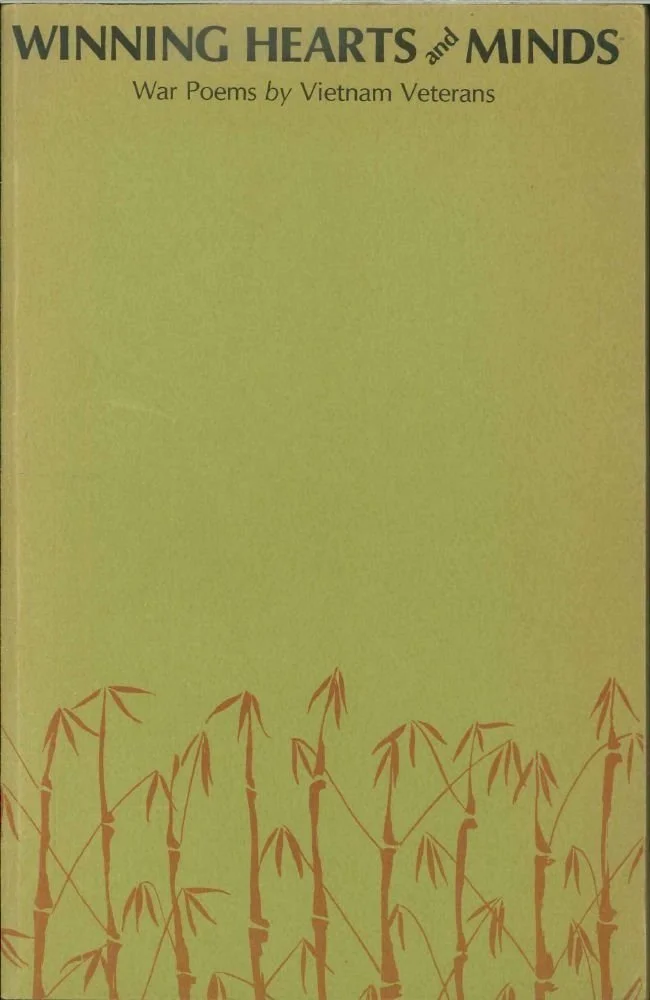
Winning Hearts and Minds: War Poems by Vietnam Veterans, 1st Casualty Press, 1972
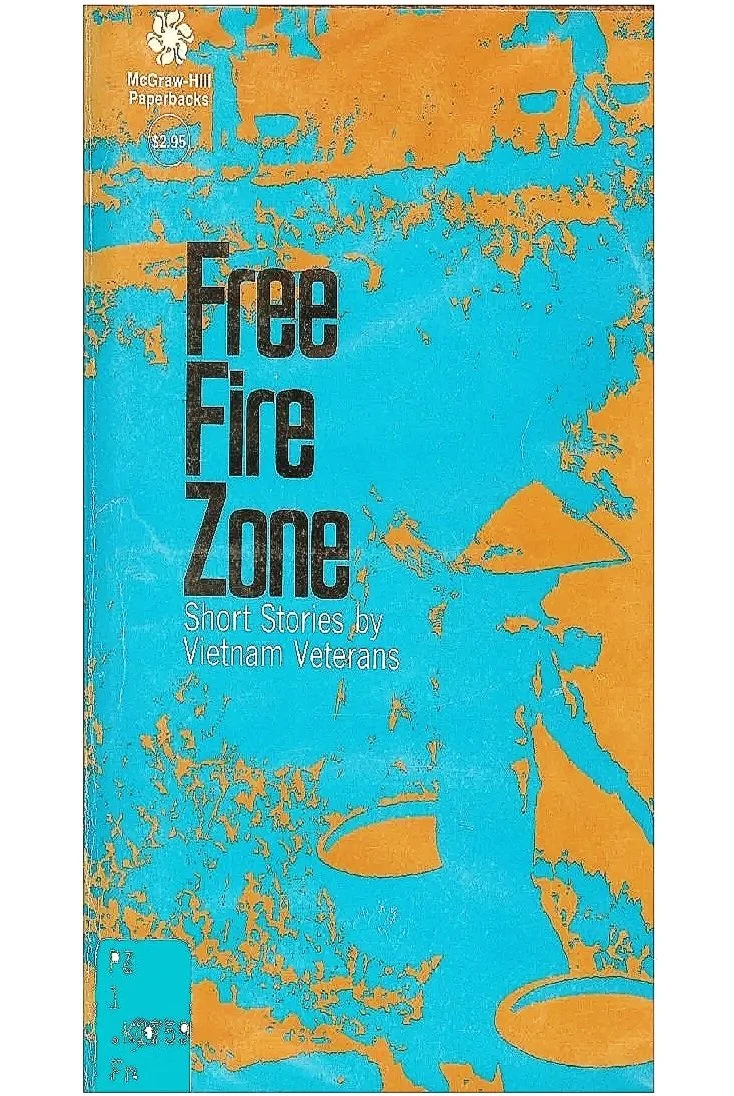
Free Fire Zone: Short Stories by Vietnam Veterans, 1st Casualty Press 1973
Postmortem, Poems and Short Stories by Vietnam Veterans, 1st Casualty Press, 1973 (unpublished anthology)
“....Paquet was the the first to collect soldier poems from the Vietnam War, and among the first to note that these poems, unlike previous war poems, openly acknowledged the complicity of American soldiers in war’s atrocities….refused to present the soldier wholly as a victim of bad policy, as earlier poems had done.”
Lorrie Goldensohn, American War Poetry
“....the essence of poetry is vivid imagery and a compression of meaning. It would be difficult to put in one paragraph of prose the stories of an exploding mine, the desire to become a man, permanent sterility, the irony of war’s attraction, and a bitter longing for death. Yet…Paquet’s ‘Basket Case’ does all this, wrenching the reader into an awareness of the straddling set of associations between war, manhood, birth, and death.”
Nancy Anisfield, Vietnam Anthology.
“.…the publication of WHAM represented the epicentre of this emergence. However, the significance of Winning as a key work of moral witness to the war, the positive reception and substantial attention given to the anthology upon its release, and the enduring legacy it bequeathed, all belie the difficult beginnings of the book. An outgrowth of the burgeoning antiwar veterans' movement, the collection brought together a selection of poems gathered over four years by members of the Vietnam Veterans Against the War (VVAW)...the poets in WHAM….actively engaged with the notion that soldiers could be morally responsible for and complicit in war. Not only was this a significant departure from earlier war poetry but….it also prefigured recent developments within moral philosophy with regard to understandings of soldier responsibility. Crucially, WHAM helped to turn English-language war poetry from primarily a poetry of victimhood into a poetry that acknowledged the potentially ambiguous role of soldiers in war.”
Adam Gilbert, "And the fire still burns": Vietnam war poetry, moral witness, and Winning Hearts and Minds
“....Paquet constantly searches for new and interesting ways to synthesize his conflicting roles of “agent” and “victim” in Viet Nam. While lesser writers seem to wallow in their guilt, he seeks to integrate these two ideas imagistically, portraying in his poetry the brutality, guilt, and complicity of the “agent” part of his psyche, as well as the outrage and defeatism of the “victim”....almost symbiotic relationship between these two roles, at times seeking an imagistic “gestalt” between his speakers and the suffering subjects that they interact with. In many instances, the two become unmistakably intertwined; their bodies (and representations thereof) interpenetrated and made one. This makes for odd war poetry, a poetry “grounded” in the most literal sense by the blood and guts of conflict, yet punctuated with moments of highly abstract psychic and spiritual connection.”
Matthew B. Hill, America, Viet Nam and the Poetics of Guilt.
“....Paquet wants his readers to share his anguish at the deaths of men he tended as a medic—and he succeeds. Of all the writers in this collection, he seems most able to make his poetry recreate the uselessness of combat death, and his poems hurt.”
John Clark Pratt, Preface, Unaccustomed Mercy